I have to train/learn how to stop? All I’ve been doing is learning how to speed up! In sport, speed is often considered synonymous with performance. Athletes train to accelerate faster, sprint harder, and generate greater power. Yet one equally important component of athletic movement receives comparatively less attention: braking biomechanics.
Consider a footballer sprinting towards an opponent before abruptly changing direction, a basketball player stopping after a fast break, or a tennis player slowing down to position themselves for the next shot.
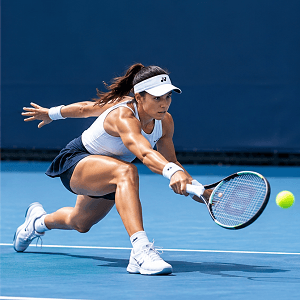
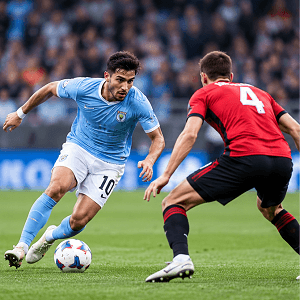
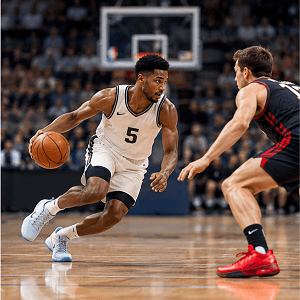
In each situation, the athlete must rapidly reduce momentum while maintaining control of their body and preparing for the next movement.
While this might look as simple as “just slowing down”, it’s a fascinating interplay between mechanical loading, neuromuscular control, sensory processing, and decision-making.
The importance of good braking biomechanics becomes particularly evident following a major lower-limb injury. An athlete may recover adequate muscular strength, demonstrate symmetrical jump performance, and resume straight-line running, yet continue to experience difficulty stopping rapidly or changing direction under unpredictable conditions.
Understanding braking biomechanics therefore has implications for both athletic performance and return-to-sport decision-making.
What is braking biomechanics (deceleration)?
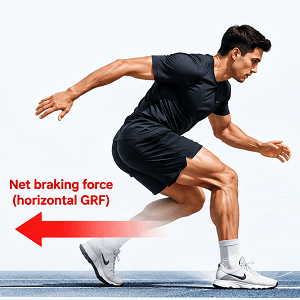
In biomechanical terms, deceleration refers to a reduction in velocity over time. During running, horizontal deceleration involves generating a net braking force opposite to the direction of travel to reduce the body’s forward momentum.
A fundamental mechanical relationship can help explain this process.
Momentum(p)=mv
Where m = body mass, v = velocity, and F = force.
An athlete moving at a higher velocity possesses greater momentum. To stop or change direction, this momentum must be reduced or redirected through appropriately oriented forces applied against the ground.
Importantly, the demand increases considerably as speed rises. While momentum increases linearly with velocity, translational kinetic energy (KE) increases with the square of velocity.
Kinetic Energy (KE) = (mv*v)/2
For example, doubling running speed increases kinetic energy fourfold. Consequently, reducing velocity over a shorter distance requires substantially greater braking demands.
Research by Harper and colleagues (2022) highlighted that high-intensity horizontal deceleration produces distinct ground-reaction-force profiles involving substantial peak forces and rapid loading rates. In the studies reviewed, peak forces during early braking contacts were reported to be as much as 2.7 times those observed during initial acceleration contacts under the specific testing conditions.
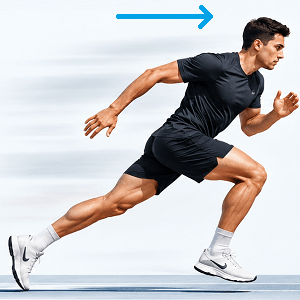
Components of efficient braking biomechanics
Effective deceleration depends on the coordinated interaction of multiple joints, muscle groups, and movement strategies.
1. Braking force production and attenuation
Every time the foot contacts the ground during deceleration, the athlete must produce a net posteriorly directed horizontal ground reaction force to oppose forward movement.
Two complementary capacities are involved.
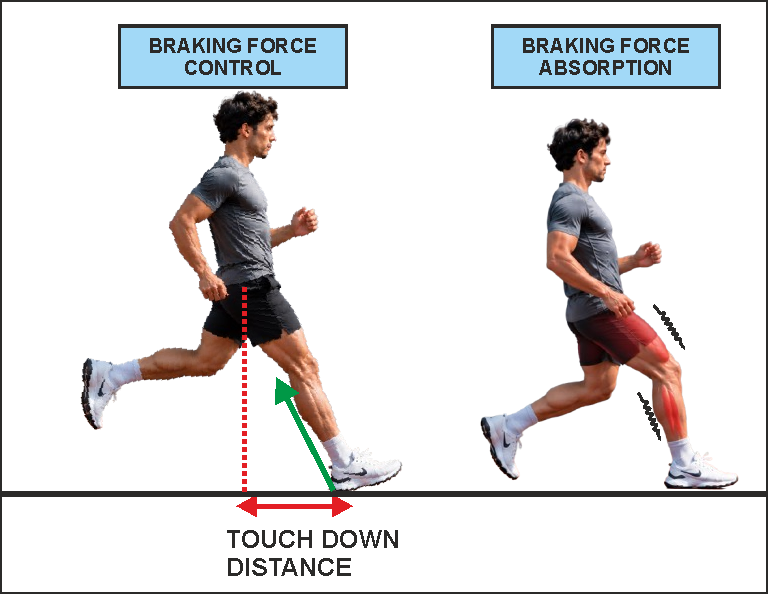
Braking force control refers to the athlete’s ability to generate and orient sufficient braking impulse to reduce momentum in accordance with the task.
Braking force attenuation refers to the ability to tolerate, distribute, and manage the resulting mechanical loads across the musculoskeletal system.
Both are essential. An athlete who generates substantial braking forces but cannot adequately tolerate the associated loading may demonstrate an inefficient or poorly controlled stopping strategy.
The quadriceps, gluteal muscles, hamstrings, and plantar flexors contribute through coordinated eccentric, isometric, and concentric actions. The relative contribution of each muscle group changes throughout the braking sequence and depends on the task being performed.
2. Centre of mass and body positioning
The relationship between the body’s centre of mass (COM) and the point of ground contact plays an important role in controlling momentum.
During planned horizontal braking, athletes commonly position the braking foot ahead of the centre of mass and adjust trunk inclination, hip flexion, and knee flexion to produce an effective posterior braking impulse.
The body must remain dynamically stable throughout this process.
An excessively upright posture, delayed braking steps, or poorly coordinated trunk and lower-limb movements may compromise the ability to reduce velocity efficiently.
However, there is no single ideal joint angle for every deceleration task. The optimal strategy depends on approach velocity, stopping distance, intended change-of-direction angle, and the athlete’s physical capabilities.
3. Multi-step braking strategies
Deceleration is not a single foot contact.
When approaching a sharp change of direction, athletes frequently begin braking several steps before the final plant foot contacts the ground.
The penultimate and earlier braking steps help reduce forward momentum, allowing the final contact to facilitate redirection and subsequent acceleration.
If insufficient braking occurs before the final contact, that limb may be required to manage greater momentum over a shorter period.
4. Eccentric strength and the ability to manage loading
Eccentric muscle actions are commonly associated with deceleration because the lower-limb musculature must control joint movement while resisting external loads.
Along with eccentric strength, maximal strength, eccentric force capacity, rate of force development, reactive strength, intermuscular coordination, and technical proficiency all contribute to the athlete’s ability to stop.
Furthermore, braking forces must often be produced over very short ground-contact durations. The athlete therefore needs not only sufficient force-producing capacity but also the ability to access that capacity rapidly.
This helps explain why an athlete may perform well during slow resistance exercises yet struggle with high-speed stopping tasks.
Components of efficient braking biomechanics
Deceleration is also a neurocognitive skill
During competition, athletes continuously process information from their environment. A footballer must observe teammates and opponents while controlling their speed. A basketball defender must interpret an attacker’s movement and select the appropriate response. A tennis player must predict ball trajectory before deciding where to position their body.
Consequently, successful deceleration involves much more than force production.
Visual perception and environmental awareness
Athletes must identify relevant information, including the position and movement of opponents, teammates, playing equipment, and available space.
The quality and timing of this information influence when braking begins and how the movement is executed.
Anticipation and decision-making
Experienced athletes frequently use contextual information to anticipate what may happen next. This allows them to initiate braking earlier and select an appropriate movement strategy.
When a movement is unexpected, the available time for planning becomes shorter. The athlete may be forced to generate braking forces under more demanding conditions.
A systematic review of anticipated versus unanticipated cutting tasks reported that unanticipated movements can produce knee mechanics associated with increased injury-related loading.
Sensorimotor integration with braking biomechanics
Proprioceptive feedback from muscles, tendons, and joints contributes to the nervous system’s estimation of joint position, movement, and loading.
This information is integrated with visual and vestibular inputs to regulate posture and coordinate muscular responses.
During deceleration, sensorimotor integration is particularly important because substantial forces must be managed within short time intervals.
What happens to braking biomechanics after a major injury?
Major lower-limb injuries almost always influence deceleration in the following ways
1. Reduced force-producing capacity
Following injury and periods of reduced loading, athletes frequently develop deficits in muscle strength and neuromuscular function.
Quadriceps weakness is especially relevant following ACL injury or reconstruction.
Because knee extensor function contributes substantially to controlling knee flexion and managing external knee moments, reduced quadriceps capacity may alter the distribution of braking demands across the lower limb.
Athletes may compensate by changing trunk position, limiting knee excursion, or redistributing work towards the hip, ankle, or opposite limb.
2. Altered loading strategies (braking biomechanics)
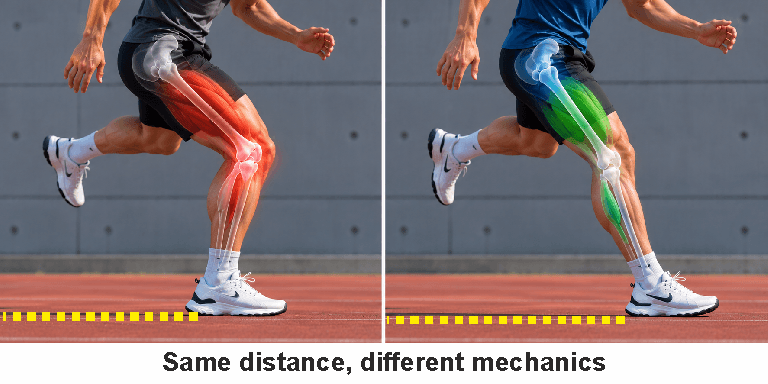
Restoration of a successful movement outcome does not necessarily indicate restoration of the original movement strategy. An athlete may achieve a similar stopping time or change-of-direction performance while distributing forces differently between limbs or joints.
This creates an important challenge for return-to-sport assessment.
Performance symmetry and movement symmetry are not interchangeable. For example, two athletes may demonstrate identical hop distances but differ substantially in landing impulse, knee joint loading, or the contribution of individual joints to the movement.
3. Changes in sensorimotor and neural control
The ligament contains sensory receptors that contribute to proprioceptive input. Injury may alter afferent information and influence neural pathways responsible for movement control.
Cortical activation and sensorimotor processing alterations may be accompanied by a greater reliance on visual feedback or conscious movement regulation.
4. Protective movement behaviours
Pain, swelling, apprehension, and fear of reinjury may also influence how an athlete decelerates.
An athlete may begin slowing earlier, reduce approach velocity, take additional braking steps, or avoid loading the previously injured limb.
These changes can be protective during rehabilitation. However, persistent reliance on them may limit the athlete’s ability to meet high-intensity sporting demands.
5. Reduced exposure to high-speed braking
Many rehabilitation programmes progressively restore walking, running, strength, and jumping capacities.
However, high-intensity stopping and multidirectional braking may receive less structured exposure, particularly when the final stages of rehabilitation focus predominantly on straight-line sprinting and traditional hop testing.
This can leave a gap between the athlete’s demonstrated physical capacity and the actual braking demands of competition.
Combining Braking biomechanics and Return to sport: What should be assessed?
Returning an athlete to sport requires more than confirming that they can run, jump, or generate symmetrical maximal strength.
A comprehensive assessment should examine whether the athlete can generate, tolerate, and demonstrate appropriate braking biomechanics under progressively more demanding conditions.
The following domains provide a practical assessment framework.
Assessment Domain | What to Assess | How to Test |
Clinical readiness | Pain, effusion, ROM, joint stability, and tissue healing | Clinical examination, goniometry, stroke test for effusion, injury-specific stability tests |
Strength capacity | Maximal and eccentric strength of quadriceps, hamstrings, plantar flexors, and hip musculature | Isokinetic dynamometry, handheld/fixed dynamometry, eccentric strength testing |
Braking biomechanics/ performance | Stopping distance, stopping time, approach velocity, and deceleration magnitude | 10–20 m sprint-to-stop test using radar, laser, timing gates, or validated tracking systems |
Movement strategy | Trunk inclination, hip and knee flexion, foot placement, braking steps, and joint loading | High-speed 2D video analysis, 3D motion capture, and force-plate analysis |
Limb contribution | Interlimb differences in braking forces, loading, and movement mechanics | Bilateral/unilateral force-plate testing, single-leg landing assessments, directional cutting analysis |
Change-of-direction performance | Ability to brake, redirect momentum, and reaccelerate in different directions | 505 test, modified 505, planned 45°, 90°, and 180° cutting tests |
Reactive performance | Ability to decelerate or change direction in response to unpredictable stimuli | Reactive agility tests using randomised visual cues, auditory signals, or opponent-based movements |
Cognitive-motor performance | Visual processing, decision accuracy, reaction time, and movement quality under cognitive demands | Dual-task deceleration tests, reactive cutting with decision-making tasks, sport-specific perceptual drills |
Repeated-load tolerance | Ability to maintain braking performance and movement quality across repeated efforts | Repeated sprint-to-stop tests, repeated COD drills, pre/post-fatigue performance comparisons |
Psychological readiness | Confidence during braking, apprehension, perceived readiness, and fear of reinjury | ACL-RSI (for ACL injuries), Tampa Scale of Kinesiophobia, athlete-reported confidence during sport-specific tasks |
Clinical Takeway: Returning to speed also means restoring the ability to stop
Deceleration is not merely the opposite of acceleration. It is a distinct motor skill that integrates force production, impact attenuation, movement coordination, sensory processing, anticipation, and decision-making.
Following a major injury, an athlete may regain strength and demonstrate satisfactory performance during conventional rehabilitation tests while continuing to experience limitations in high-speed braking or reactive movement.
For practitioners involved in athletic rehabilitation, this highlights the importance of evaluating not only how much force an athlete can produce, but also how rapidly and effectively that force can be applied, controlled, and tolerated.
The most informative return-to-sport assessment is therefore one that progresses beyond isolated strength and jumping performance to examine braking biomechanics, multidirectional movement, and responses to realistic sporting demands.
GaitON offers comprehensive movement analysis solutions to measure 2-dimensional deceleration, change of direction and cutting. To book a demo, contact us today!
ABOUT THE AUTHOR

GAYATRI SURESH (PT)
Gayatri Suresh (PT) is a Biomechanist who has completed her B.P.Th from DES College of Physiotherapy and M.P.T (Biomechanics) from SRM College of Physiotherapy, SRMIST. Her field of clinical expertise is in movement assessments through video analysis. Apart from her work at Auptimo, she works as a Clinical Specialist at Rehabilitation Research and Device Development, IIT Madras. She has won gold medals for her Research presentations and for securing First rank with distinction in her MPT degree respectively.
The information found within this site is for general information only and should not be treated as a substitute for professional advice from a licensed medical practitioner. Any application of exercises and diagnostic tests suggested is at the reader’s sole discretion and risk.
REFERENCES
- Harper DJ, McBurnie AJ, Santos TD, Eriksrud O, Evans M, Cohen DD, Rhodes D, Carling C, Kiely J. Biomechanical and Neuromuscular Performance Requirements of Horizontal Deceleration: A Review with Implications for Random Intermittent Multi-Directional Sports. Sports Med. 2022 Oct;52(10):2321-2354. doi: 10.1007/s40279-022-01693-0. Epub 2022 May 29. PMID: 35643876; PMCID: PMC9474351.
- Harper DJ, Kiely J. Damaging nature of decelerations: Do we adequately prepare players?. BMJ Open Sport & Exercise Medicine. 2018;4:e000379. https://doi.org/10.1136/bmjsem-2018-000379
- Kotsifaki, R., et al. (2023). Aspetar clinical practice guideline on rehabilitation after anterior cruciate ligament reconstruction. British Journal of Sports Medicine, 57, 500–514. https://doi.org/10.1136/bjsports-2022-106158
- Grooms, D. R., et al. (2023). Combining neurocognitive and functional tests to improve return-to-sport decisions following ACL reconstruction. Journal of Orthopaedic & Sports Physical Therapy, 53(8), 415–419. https://doi.org/10.2519/jospt.2023.11489
- Thomas ZM, Lupowitz L, Ivey M, Wilk KE. Neurocognitive and Neuromuscular Rehabilitation Techniques after ACL injury – Part 2: Maximizing Performance in the Advanced Return to Sport Phase. Int J Sports Phys Ther. 2024 Dec 1;19(12):1629-1641. doi: 10.26603/001c.126270. PMID: 39628780; PMCID: PMC11611477.
- Harper DJ, Philipp NM, Eriksrud O, Jones PA, Graham-Smith P, Dos’Santos T. Assessing Deceleration Performance: Methodological and Practical Considerations. Sports Med. 2026 Jan;56(1):1-22. doi: 10.1007/s40279-025-02339-7. Epub 2025 Nov 27. PMID: 41307885; PMCID: PMC12913331.
- Bertozzi F, Fischer PD, Hutchison KA, Zago M, Sforza C, Monfort SM. Associations Between Cognitive Function and ACL Injury-Related Biomechanics: A Systematic Review. Sports Health. 2023 Nov-Dec;15(6):855-866. doi: 10.1177/19417381221146557. Epub 2023 Jan 20. PMID: 36680310; PMCID: PMC10606969.