“But…I’ve been told I can play again” . This blog stems from a personal experience where I’ve had an influx of cases of athletes coming in for Strength and Conditioning at 5-7 months after surgery, as advised by their healthcare providers. However, when tested for return to sport criteria, most athletes do not pass almost 70% of the tests, with significant deficits in strength, power, control and sometimes even range.
Interestingly, all of them had one thing in common, i.e., the ability to run, jump and squat.
Reflecting on this, as a physiotherapist, it would definitely feel like a success once a post-surgical athlete starts to run and jump, indicating that they are ready to go back to sport.
But, the ability to perform these movements is just the beginning. How they do it determines RTS and reduces risk of re-injury.
So how does one understand if an athlete can be cleared for sport? Let’s start by looking at the definition of return to sport.
What forms a Return to Sport Criteria?
It’s not a one time test, one time clearance for sport, but a structured, multi-stage process where an athlete resumes competitive, pre-injury training and play.
It is continuum which occurs in 3 stages –
Return to Participation Criteria: The athlete is back to sport activities but at a level lower than their target (e.g., training, modified practice), not yet fully ready for competition.

Return to Sport Criteria (Specific): The athlete has returned to competing in games or matches, but not yet at their pre-injury level of performance.

Return to Performance Criteria: The athlete has achieved the pre-injury level of performance or better.
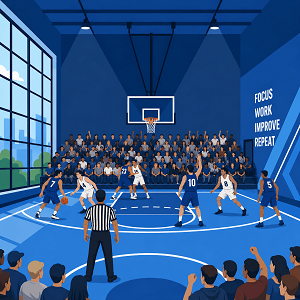
Most of the time, athletes get cleared in the Return to Participation Phase.
Common Scenarios affecting return to sport criteria (And Why They Fail)
Scenario 1
Injury → 3 months rehab → playing in 4th month
Can they be cleared?
No.
Time alone does not equal readiness.
Scenario 2
Injury → 9 months rehab → running, jumping, playing
Can they be cleared?
Maybe.
Only if all criteria are met and not just activity tolerance.
Scenario 3
Great physical recovery but fear of returning
Can they be cleared?
No.
Psychological readiness is a non-negotiable factor.
What Is Return to Sport Criteria (RTS)?
A criteria based progression that consists of 4 aspects
1. Biological Criteria (Time)
2. Physical Readiness
- Pain
- Range of motion
- Strength
- Inflammation
3. Psychological Readiness
- Apprehension
- Fear of movement (kinesiophobia)
- Confidence
4. Functional Readiness
- Sport-specific movements
- Real-world performance demands
Timelines for tissue healing
While physical readiness has been emphasised until now, knowing what is a “normal” healing and adaptation time helps in
- Educating the client. Setting expectations of how long recovery will take.
- Preventing from clearing an athlete too early – indirectly setting them up for a high risk of re-injury.
Tissue | Primary Healing Characteristics | Early Biological Healing (Structural continuity) | Remodelling & Maturation (Load tolerance develops) | Key for RTS |
Bone | Highly vascular, strong regenerative capacity | 6–8 weeks (clinical union in uncomplicated fractures) | Months to years (ongoing remodelling) | Radiological union ≠ full load tolerance; impact loading must be graded |
Skeletal Muscle | Rich blood supply, rapid regeneration | 2–3 weeks (functional recovery often early) | ≥4–6 weeks for organised fibre regeneration | Strength may return before tissue quality → high re-injury risk |
Ligament (extra-articular) | Poor vascularity, collagen-dominant | Inflammation ~10 days; proliferation 4–8 weeks | Up to 12 months | Stability may feel “normal” long before collagen stiffness recovers |
Tendon | Very low metabolic rate, high collagen content | Weeks to months (slow matrix repair) | 6–12+ months | Pain reduction ≠ load capacity; energy-storage demands are the limiter |
Articular Cartilage | Avascular, minimal intrinsic repair | Very limited natural healing | Often incomplete without intervention | Time alone does not restore cartilage quality |
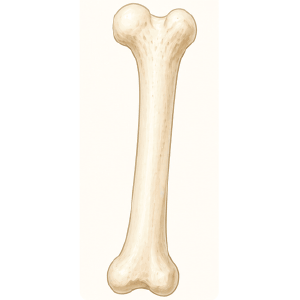
Bone
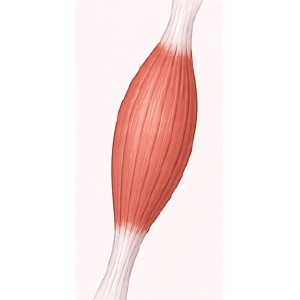
Skeletal Muscle
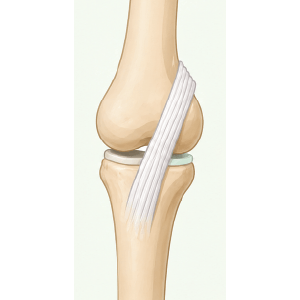
Ligament
(extra-articular)
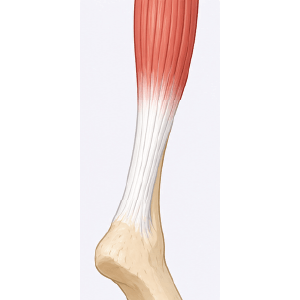
Tendon
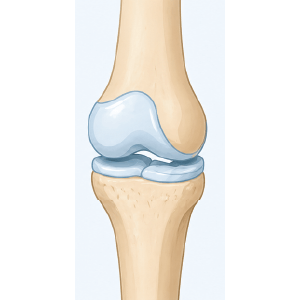
Articular Cartilage
How to test each return to sport criteria?
Start by asking the following question –
“Can the athlete tolerate sport-specific loads using efficient movement strategies, given current tissue capacity?”
To answer this, we need to understand three things:
1. Tissue Capacity
What matters:
- Stage of healing
- Tissue type
- Structural properties
- Fatigue and training history
What to assess | Biomechanical Meaning |
Time since injury/surgery | Collagen organisation and remodelling |
Tissue involved | Determines strain rate sensitivity Muscle Functional recovery often precedes tissue maturity High risk with early high-speed loading Tendon & ligament Strength gains ≠ stiffness recovery Vulnerable to elastic, fast loading Bone Union ≠ impact readiness Remodeling lags behind radiology |
Injury severity & type | Predicts residual deficits |
Pain & effusion | Indicators of load intolerance |
Key Rule:
If tissue biology cannot handle sport loads → DO NOT CLEAR
Even if all tests look good.
2. Movement Strategy
What to observe:
- Joint sequencing (hip–knee–ankle)
- Control and coordination
- Trunk and pelvis stability
- Symmetry
Check for the following
- Is load distributed or concentrated?
- Does speed break control?
- Does fatigue change movement?
- Are there compensatory patterns, and why?
3. Load Tolerance
What to measure:
- Force magnitude (how much force)
- Rate of force development (how fast)
- Volume (repetition/fatigue)
- Direction (cutting, deceleration)
- Predictability (planned vs reactive)
What to interpret:
- How quickly is force applied?
- Which joints are doing the work?
- Is force absorption symmetrical?
- High strain rates → tendon injury
- Excess joint loads → overload
- Poor symmetry → reinjury
Decision-Making Framework
Tissue Capacity | Movement Strategy | Load Tolerance | Decision |
Adequate | Stable | Tolerated | Progress |
Adequate | Unstable | Tolerated | Retrain movement |
Borderline | Stable | Partial | Modify RTS |
Inadequate | Unstable | Not tolerated | Do not clear |
Common Errors affecting return to sport criteria
1. Testing Too Early:
Testing an athlete before full recovery can lead to inaccurate results and a higher risk of reinjury. At this stage, the athlete may still have pain, reduced strength, or limited mobility, which means the test does not truly reflect their readiness for sport. Proper healing and basic rehabilitation milestones should be achieved before RTS testing begins.
2. Wrong Order of Tests:
Performing tests in an incorrect sequence can mask deficiencies and increase injury risk. For example, skipping basic strength or balance assessments and moving directly to high-intensity or sport-specific tests can overlook important weaknesses. A structured progression from simple to complex tests is essential.
3. Errors in Measurement :
Inaccurate measurement methods can lead to unreliable results. This may include inconsistent test conditions, improper use of equipment, or human error in recording data. Standardized procedures and proper tools are necessary to ensure valid and consistent outcomes.
4. Wrong Interpretation of Results :
Misinterpreting test results can result in poor decision-making about an athlete’s readiness. Relying on a single test, ignoring individual differences, or misjudging performance benchmarks can lead to premature return to sport. A comprehensive and well-informed evaluation is crucial.
Clinical Takeaways
Know your athlete’s sport to understand tissue demands
Follow criteria based rehab progression
- Make RTS decisions as per the RTS stages
- Stay updated with testing protocols
- Involve a multidisciplinary team to make RTS decision
At GaitON we offer movement analysis solutions to help you track movement quality, and help with your return to sports decisions! Reach out to us for a free demo!
ABOUT THE AUTHOR

GAYATRI SURESH (PT)
Gayatri Suresh (PT) is a Biomechanist who has completed her B.P.Th from DES College of Physiotherapy and M.P.T (Biomechanics) from SRM College of Physiotherapy, SRMIST. Her field of clinical expertise is in movement assessments through video analysis. Apart from her work at Auptimo, she works as a Clinical Specialist at Rehabilitation Research and Device Development, IIT Madras. She has won gold medals for her Research presentations and for securing First rank with distinction in her MPT degree respectively.
References
The information found within this site is for general information only and should not be treated as a substitute for professional advice from a licensed medical practitioner. Any application of exercises and diagnostic tests suggested is at the reader’s sole discretion and risk.