Lower body power testing routinely involves jump testing for measuring vertical and horizontal power. With the increasing use of force plates in applied settings, standardized jump tests with Ground reaction forces (GRF) metrics have become popular as compared to field tests. However, the three most used vertical jump assessments – the countermovement jump, squat jump and drop jump, do not assess the same neuromuscular quality.
A counter movement jump evaluates how an individual produces force after a self-selected eccentric counter movement. A squat jump attempts to isolate force production from a static position. A drop jump evaluates how rapidly the neuromuscular system can absorb and redirect force after landing from a predetermined height.
The correct test therefore depends on the clinical or performance question being asked. Selecting a jump merely because it is familiar, available in the software or commonly reported may produce data that are reliable but not relevant.
This article explains what each jump assesses, which metrics are meaningful and how physiotherapists and biomechanists can select the most appropriate test.
What do we mean by lower-body power testing?
Mechanical power describes the rate at which mechanical work is performed. Instantaneous power can also be expressed as the product of force and velocity:
Power = Force × Velocity
An individual may produce high force but do so slowly or move rapidly while producing relatively little force. Power reflects the interaction between these two capabilities.
This distinction is important because jump height is not synonymous with peak power. Jump height is primarily determined by the vertical velocity of the centre of mass at take-off, which is produced through the net vertical impulse generated before take-off. Two athletes may achieve similar jump heights using different combinations of force, movement depth, contraction time and velocity.
Similarly, an athlete may maintain jump height while changing movement strategy. For example, they may use a deeper countermovement or a longer contraction time to compensate for reduced force-production capacity. Examining jump height alone may therefore miss clinically or physiologically important changes in how the jump was performed. Detailed force–time analysis provides substantially more information than the final performance outcome alone.
Methods of lower body power testing
1. Force platforms
Force platforms directly measure ground reaction force and are an important part of lower body power testing. From the vertical force signal, software can calculate acceleration, centre-of-mass velocity, displacement, impulse and power across different phases of the jump.
A force platform can therefore provide:
- Jump height
- Take-off velocity
- Net impulse
- Peak and mean force
- Peak and mean power
- Contraction and phase durations
- Countermovement depth
- Ground contact time
- Landing forces
- Inter limb asymmetry when dual platforms are used
Force platforms are the preferred method when the aim is to understand how the athlete produced the jump rather than only how high they jumped.
However, the outputs depend on signal processing choices. Movement-onset thresholds, take-off detection, integration methods, filtering and jump-height equations can produce different values from the same force signal.
2. Contact (jump) mats and optical timing systems
Contact mats and infrared systems commonly estimate jump height from flight time. During a drop jump, they can also measure ground contact time and calculate the reactive strength index.
These systems are portable and practical for field testing, but they provide limited information about force production, braking strategy, impulse or power. Flight-time methods also assume that the position of the body at take-off and landing is equivalent. Changes in hip, knee or ankle position during landing can therefore affect the estimated jump height.
Contact mats may demonstrate high reliability but should not automatically be used interchangeably with force platforms.
3. Video and markerless motion analysis
With recent advances in artificial intelligence, lower body power testing has been extremely convenient. High-speed video and smart phone applications can estimate flight time, jump height and selected kinematic variables. More advanced markerless like GaitON or optical motion-capture systems can quantify both kinematic and kinetic data as produced by a force platform including:
- Joint angles
- Segmental movement
- Countermovement depth
- Trunk strategy
- Frontal-plane motion
- Take-off and landing technique
- Jump height
- Take-off velocity
- Net impulse
- Peak and mean force
Kinematic systems are particularly useful when the clinical question concerns movement strategy. However, kinematics alone cannot directly quantify force, impulse or mechanical power unless combined with force measurement or an appropriately validated biomechanical model.
4. Inertial measurement units
Accelerometers and inertial measurement units offer portable assessment of jump height, velocity and temporal variables. Their accuracy depends on sensor location, sampling frequency and the algorithms used. They can be useful for repeated field monitoring, but results from different devices or sensor placements should not be treated as equivalent without validation.
5. Loaded jump and force–velocity profiling
Loaded squat jumps or jump squats can be performed across several external loads to construct a force-velocity profile. This approach estimates theoretical maximal force, theoretical maximal velocity, maximal power and the slope of the force–velocity relationship.
Force-velocity profiling answers a different question from a single unloaded CMJ, SJ or DJ. It is useful when the objective is to identify whether an athlete’s ballistic performance is relatively force-deficient or velocity-deficient. It requires greater time, equipment, technical control and familiarity, and should not be considered a direct substitute for an unloaded jump test.
Lower body power testing: The countermovement jump
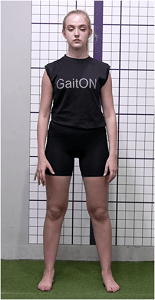
1: Stable Standing
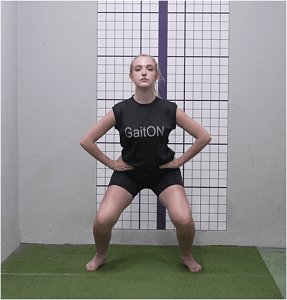
2: Counter movement
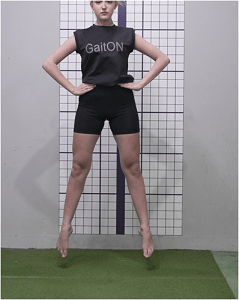
3: Jump
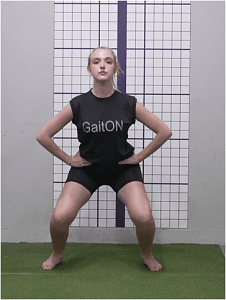
4: Landing
5: Stable Standing
What does it assess?
During a countermovement jump, the individual begins upright, rapidly lowers the centre of mass and then immediately reverses the movement to jump vertically.
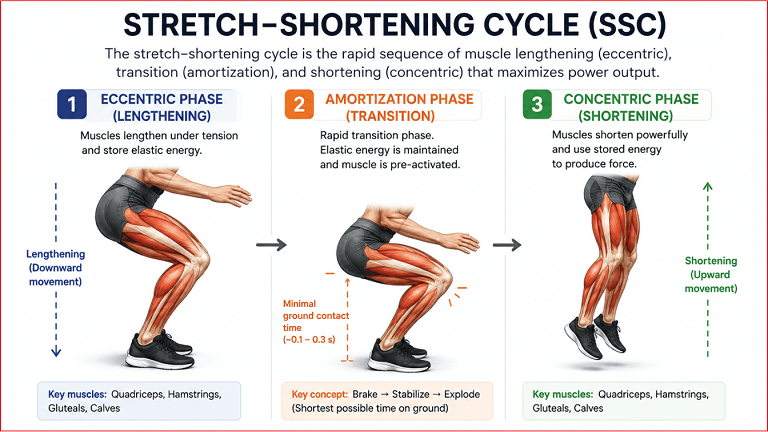
The test incorporates a slow stretch-shortening cycle. The downward movement permits the athlete to increase the time available for force development, activate the musculotendinous system before the propulsive phase and potentially use elastic and reflex-related mechanisms.
The CMJ can be separated into the following phases:
- Weighing: quiet standing before movement.
- Unweighting: force falls below body weight as the centre of mass accelerates downwards.
- Braking: the athlete applies force to decelerate the downward movement.
- Propulsion: the centre of mass moves upwards until take-off.
- Flight: Being airborne
- Landing
These phases allow the CMJ to assess not only performance but also the strategy used to produce that performance.
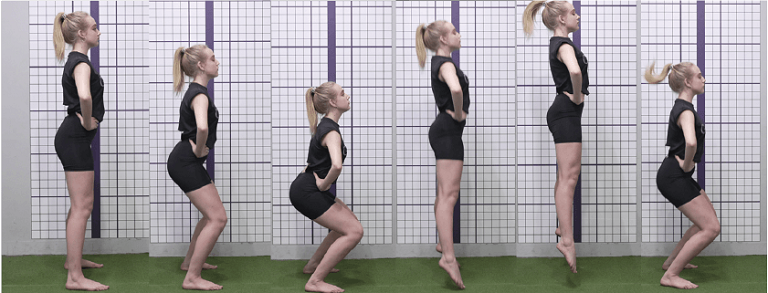
CMJ Phases: Weighing -> Unweighting -> Braking -> Propulsion -> Flight -> Landing
Important CMJ metrics
|
Metric |
What it represents |
Interpretation considerations |
|
Jump height |
Final jump outcome |
Useful global measure, but does not explain the strategy used |
|
Take-off velocity |
Vertical centre-of-mass velocity at take-off |
Direct mechanical determinant of jump height |
|
Net propulsive impulse |
Net force integrated over propulsive time |
Determines the change in momentum and take-off velocity |
|
Peak force |
Highest instantaneous force |
May not represent force produced throughout the movement |
|
Mean propulsive force |
Average force during propulsion |
More representative of force application across the propulsive phase |
|
Peak power |
Highest instantaneous force–velocity product |
Sensitive to brief peaks and processing methods |
|
Mean propulsive power |
Average power during propulsion |
Describes sustained mechanical output during propulsion |
|
Countermovement depth |
Vertical displacement during the countermovement |
Indicates the range of motion used to generate impulse |
|
Contraction time |
Time from movement onset to take-off |
Shows how long the athlete took to complete the jump |
|
RSI-modified |
Jump height divided by contraction time |
Represents the ability to achieve height relative to the time used |
|
Peak braking force |
Highest force while decelerating the downward movement |
Reflects the magnitude of braking force, but not braking quality in isolation |
|
Braking impulse |
Force integrated over braking time |
Quantifies the impulse used to arrest downward momentum |
|
Inter limb asymmetry |
Difference in force or impulse between limbs |
Metric-specific; direction and magnitude may vary across phases |
Why jump height alone can be misleading in lower body power testing
Consider an athlete who records the same jump height in two testing sessions. In the second session, they use:
- A deeper countermovement
- A longer contraction time
- Lower mean propulsive force
- Lower RSI-modified
The athlete has preserved the final outcome but required more time and displacement to do so. This may represent a change in neuromuscular strategy rather than unchanged performance.
For athlete monitoring and rehabilitation, it is therefore useful to combine an outcome metric, such as jump height, with at least one force-production metric and one strategy or temporal metric.
When should you select the CMJ in lower body power testing?
The CMJ is usually the most appropriate choice when the aim is to assess:
- General lower-limb explosive performance
- Global neuromuscular status
- Training adaptation
- Fatigue-related changes
- Eccentric braking and concentric propulsion strategies
- Bilateral force-production asymmetry
- Rehabilitation progression
- Return-to-performance status
- Performance in sports involving jumping from a preparatory countermovement
The CMJ is often the most practical default vertical jump test because it is relatively natural, familiar and applicable across a wide range of athletic and clinical populations.
However, it does not isolate eccentric, concentric or reactive qualities. A good CMJ result cannot determine whether an athlete has adequate fast stretch-shortening-cycle function.
Lower body power testing: The squat jump
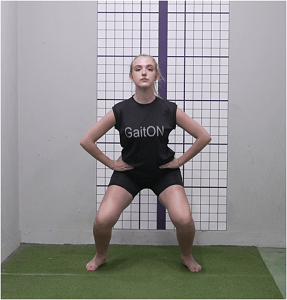
Stable – Squat isometric hold
Jump
Landing
Stable Standing
What does it assess?
In a squat jump, the athlete begins in a stationary squat position and jumps vertically without first performing a downward countermovement.
The objective is to reduce the contribution of the preceding eccentric action and assess force production during a predominantly concentric movement. The SJ is therefore commonly used as an indicator of concentric-only ballistic performance.
The term “purely concentric”, however, should be used cautiously. Maintaining a static squat involves prior muscle activation and isometric force. A small preparatory countermovement may also occur unless the movement is carefully monitored.
Important SJ metrics
|
Metric |
What it represents |
Interpretation considerations |
|
Jump height |
Concentric jump outcome |
Strongly influenced by starting position and squat depth |
|
Take-off velocity |
Vertical velocity at take-off |
Mechanical determinant of jump height |
|
Net concentric impulse |
Net force integrated from movement initiation to take-off |
Reflects total momentum generated from the static position |
|
Peak force |
Maximum instantaneous force |
May be sensitive to starting posture and early force transients |
|
Mean concentric force |
Average force during push-off |
Describes overall force production |
|
Peak and mean power |
Mechanical power during push-off |
Dependent on both force and velocity |
|
Time to take-off |
Time required to initiate and complete propulsion |
Provides information about rapid concentric force production |
|
RFD or early impulse |
Early rise in force after movement initiation |
Potentially relevant but highly sensitive to onset detection and protocol consistency |
Why protocol control is critical in lower body power testing
The starting knee angle and squat depth change the available range of motion, muscle length, push-off distance and time available to produce impulse. Research continues to show that variations in starting position alter SJ outcomes and force–velocity variables.
A standardised SJ protocol should specify:
- Starting knee or squat angle
- Whether the position is self-selected or externally controlled
- Duration of the static hold
- Hand position
- Whether heels must remain in contact before initiation
- Instructions regarding countermovement
- How trials containing a preparatory force reduction are identified and rejected
Force-time software should allow practitioners to inspect the trace for a countermovement rather than accepting every completed trial as a valid SJ.
Comparing the CMJ and SJ in lower body power testing
The CMJ is usually higher than the SJ because the countermovement increases the time available to generate force and alters the neuromuscular and mechanical conditions before propulsion. The difference between CMJ and SJ performance is sometimes reported as the eccentric utilisation ratio:
EUR = CMJ performance ÷ SJ performance
Alternatively, the absolute or percentage difference in jump height may be reported.
Although this comparison may describe whether an individual performs differently with and without a countermovement, it should not be interpreted as a direct measure of elastic-energy utilisation or stretch-shortening-cycle efficiency. The difference can be influenced by SJ technique, squat depth, coordination, familiarisation and the athlete’s ability to maintain a static starting position. Evidence questioning the diagnostic and performance value of EUR suggests that it should not be used alone to prescribe training.
When should you select the SJ during lower body power testing?
Select the SJ when the purpose is to examine:
- Concentric ballistic force production
- Performance without a preparatory countermovement
- Early concentric impulse generation
- Loaded jump force–velocity profiling
- Changes following strength- or concentric-power-focused training
- Whether an athlete’s CMJ performance depends heavily on a countermovement strategy
- A simpler force-time task with fewer eccentric-phase variables
The SJ may also be useful when an eccentric countermovement is temporarily undesirable. Nevertheless, the fixed squat position may still be demanding for individuals with pain, mobility restrictions or reduced knee-flexion tolerance.
Lower body power testing: The drop jump
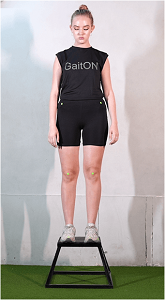
Stable on the platform
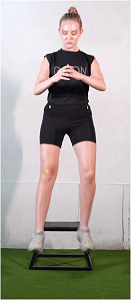
Drop
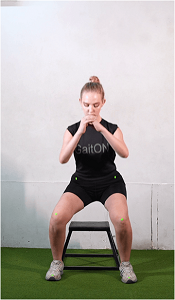
Counter movement
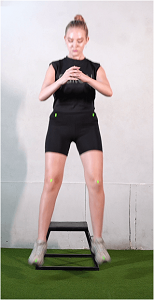
Jump
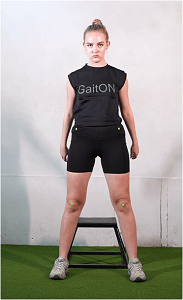
Stable Standing
What does it assess?
In a drop jump, the athlete steps from a box, lands and immediately performs a maximal vertical jump.
Unlike the CMJ, the downward velocity before ground contact is produced by falling from the box rather than by a self-generated countermovement. The athlete must rapidly absorb the landing load, reverse the movement and generate propulsive impulse within a short ground-contact period.
The DJ is therefore primarily a test of:
- Reactive strength
- Fast stretch-shortening-cycle function
- Rapid eccentric-to-concentric transition
- Landing stiffness and force attenuation
- The ability to generate vertical output under time constraint
Important DJ metrics
|
Metric |
What it represents |
Interpretation considerations |
|
Ground contact time |
Time between initial contact and subsequent take-off |
Central measure of how rapidly the athlete reverses the movement |
|
Jump height |
Output achieved after landing |
Must be interpreted alongside contact time |
|
Reactive Strength Index |
Jump height divided by contact time |
Primary outcome for assessing height produced relative to ground-contact duration |
|
Flight-time-to-contact-time ratio |
Flight time divided by contact time |
Alternative reactive-strength measure; not numerically interchangeable with RSI |
|
Peak landing force |
Highest force after initial contact |
Influenced by drop height, landing posture and stiffness strategy |
|
Braking impulse |
Impulse used to arrest downward momentum |
Reflects management of the landing load |
|
Time to zero velocity |
Time required to decelerate the centre of mass after landing |
Describes speed of braking |
|
Eccentric and concentric phase durations |
Timing of landing absorption and propulsion |
Helps distinguish reactive from prolonged jump strategies |
|
Leg or vertical stiffness |
Relationship between force and displacement |
Potentially informative, but calculation and reliability require caution |
|
Interlimb asymmetry |
Limb contribution during landing, braking or propulsion |
Should be examined separately by phase and metric |
The most widely used calculation is:
RSI = Jump height in metres ÷ Ground contact time in seconds
An athlete who jumps high but remains on the ground for a prolonged period may achieve a lower RSI than an athlete who produces slightly less height with a much shorter contact time.
The instruction determines the test
A drop jump can be performed with different intentions:
- Jump as high as possible
- Minimise contact time
- Jump as high as possible while minimising contact time
These instructions produce different force-time strategies. A maximal-height instruction may encourage deeper knee flexion and longer ground contact. A minimal-contact instruction may reduce jump height and promote a stiffer strategy.
For reactive-strength testing, the instruction should explicitly emphasise both maximal jump height and minimal ground contact time. The wording should then remain identical across sessions.
Drop height must be standardised
As box height increases, landing velocity and mechanical demand generally increase. However, a higher box does not necessarily produce a better RSI. Beyond an individual’s capacity, greater drop height may result in:
- Longer contact time
- Excessive countermovement depth
- Reduced jump height
- Loss of lower-limb stiffness
- Increased landing force
- Altered inter limb strategy
The actual drop height may also differ from the box height because athletes can step upwards, lower themselves or jump from the box. Consequently, practitioners should cue the athlete to step horizontally from the box without jumping upwards or lowering excessively.
Research has found meaningful discrepancies between nominal box height and actual fall height, making caution necessary when comparing athletes or testing systems.
When should you select the DJ for lower body power testing?
Select the DJ when the purpose is to assess:
- Reactive strength
- Fast stretch-shortening-cycle performance
- Short ground-contact force production
- Landing-to-take-off transition ability
- Plyometric readiness or adaptation
- Performance qualities relevant to sprinting and repeated jumping
- Late-stage rehabilitation for sports involving rapid landing and rebound actions
- Residual reactive-strength deficits during return-to-sport assessment
A DJ should usually not be the first jump test introduced in early rehabilitation. The individual should first demonstrate adequate:
- Landing competency
- Strength
- Load tolerance
- Bilateral and unilateral jump capacity
- Confidence
- Ability to absorb impact without pain or major compensation
Reactive-strength testing has identified deficits that may persist even when slower jump tasks appear satisfactory, including in athletes approaching return to sport after ACL reconstruction.
How should you decide the ideal jump for lower body power testing?
The test should follow the assessment question.
Assessment question | Preferred test | Rationale |
What is the athlete’s general vertical explosive capacity? | CMJ | Provides a practical global measure of jump performance |
How is the athlete producing the jump? | CMJ on force platforms | Allows analysis of braking, propulsion, depth, timing and asymmetry |
Has neuromuscular performance changed after training or competition? | CMJ | Practical for repeated monitoring and sensitive to strategy changes |
Can the athlete generate ballistic output from a static position? | SJ | Reduces the contribution of the preparatory countermovement |
Is concentric force production a specific concern? | SJ, ideally with force-time analysis | Emphasises concentric impulse and power production |
Is the athlete relying excessively on countermovement depth or time? | CMJ and SJ, interpreted separately | Comparison may reveal strategy differences, but EUR should not be treated as a diagnosis |
Can the athlete absorb and redirect force rapidly? | DJ | Directly challenges reactive strength and rapid transition ability |
Is fast stretch-shortening-cycle function relevant to the sport? | DJ | Contact time and RSI are more task-specific than CMJ height |
Is the patient in early rehabilitation? | SJ or controlled CMJ, depending on tolerance | Lower reactive impact than a DJ |
Is the athlete in late-stage return-to-sport testing? | CMJ plus DJ | Assesses both slower and faster stretch-shortening-cycle qualities |
Is landing biomechanics the main concern? | CMJ or DJ with landing analysis | The selected jump should replicate the expected landing demand |
Is the aim to identify a force- or velocity-oriented ballistic deficit? | Loaded SJ or jump-squat profile | Requires testing across multiple external loads |
Should all three tests be included in Lower body power testing?
Not necessarily.
More testing does not automatically produce better decision-making. Every test should contribute information that could alter rehabilitation, training or return-to-sport planning.
For general athlete monitoring, the CMJ may be sufficient. For a sprinter, volleyball player or basketball player, combining the CMJ with a DJ may provide complementary information about slower and faster stretch-shortening-cycle performance. An SJ may be added when concentric force production or loaded force–velocity profiling is clinically relevant.
A comprehensive battery might therefore include:
- CMJ: global jump capacity and self-selected force-production strategy.
- SJ: concentric ballistic capacity from a static position.
- DJ: reactive strength under short-contact conditions.
It is important not to interpret the tests as a hierarchy in which the DJ is automatically more advanced or the CMJ is always less demanding. Each test constrains the movement differently and assesses a different expression of neuromuscular capacity.
Avoid collecting every available metric during lower body power testing
Modern biomechanical software can generate dozens of variables from a single jump. This creates a risk of reporting metrics simply because they are available.
A more defensible approach is to select metrics according to the construct of interest.
A practical minimum metric set
CMJ
- Jump height or take-off velocity
- Relative propulsive impulse
- Mean propulsive force or power
- Countermovement depth
- Contraction time or RSI-modified
- Phase-specific asymmetry when dual force platforms are available
SJ
- Jump height or take-off velocity
- Relative concentric impulse
- Mean concentric force or power
- Time to take-off
- Confirmation that no countermovement occurred
DJ
- RSI
- Ground contact time
- Jump height
- Drop height
- Braking or landing impulse
- Phase-specific asymmetry when relevant
Peak values should not automatically be prioritised over mean or impulse-based measures. A single brief force or power peak may not represent the overall mechanical strategy. Similarly, RFD can be sensitive to movement-onset identification, sampling frequency, filtering and the selected time window.
Practitioners should first establish the reliability of each metric in their own population and testing protocol. Recent research suggests that many CMJ force-time metrics can demonstrate acceptable reliability, but reliability is metric-specific. In the DJ, variables such as stiffness and RFD may be less reliable than jump height, contact time and RSI.
Standardisation is as important as test selection
A change in score should reflect a change in the athlete, not a change in protocol.
The following should be standardised:
- Warm-up
- Test order
- Number of trials
- Rest between trials
- Hands on hips or arm swing
- Foot position
- Footwear
- Testing surface
- Instructions
- Countermovement depth policy
- SJ starting angle and static-hold duration
- DJ box height
- Whether the athlete steps or jumps from the box
- Time of day where relevant
- Force-platform sampling and filtering
- Movement-onset and take-off thresholds
- Jump-height calculation method
- Whether the best trial or average of trials is reported
Arm swing should either be consistently permitted or consistently restricted. Allowing an arm swing may increase ecological validity for some sports but introduces additional coordination and technique-related variability.
Familiarisation is especially important for the SJ and DJ. The SJ requires the athlete to initiate rapidly without a countermovement, while the DJ requires control of stepping technique, landing stiffness and the height-versus-contact-time objective. A technically invalid test should not be retained simply because the software generated a result. Reviews of CMJ and SJ protocols continue to identify substantial methodological variation, limiting comparisons between studies and normative datasets.
Do not interpret a jump test in isolation
A vertical jump test cannot independently determine:
- Injury risk
- Tissue healing
- Return-to-sport readiness
- Sport-specific performance
- Whether an athlete requires a specific exercise
- The cause of an observed asymmetry
Jump testing should be combined with clinical assessment, strength testing, horizontal and unilateral tasks, sport-specific exposure, symptoms, training history and movement analysis.
In rehabilitation, bilateral jump height may look satisfactory even when the uninvolved limb compensates for the involved limb. Dual force platforms can identify limb contribution, but asymmetry must be interpreted carefully. An athlete may display different magnitudes or even different directions of asymmetry in braking force, propulsive impulse and landing force.
A limb-symmetry index can also appear acceptable when both limbs are below the athlete’s previous capacity. Comparison with pre-injury data, healthy reference groups, sport demands and longitudinal trends is therefore preferable to relying on a single percentage threshold.
Summary
The countermovement jump is the most versatile option for evaluating global explosive performance, force-production strategy and neuromuscular status. It is often the logical starting point for athlete monitoring and rehabilitation assessment.
The squat jump is useful when the practitioner specifically wants to examine ballistic concentric performance from a static position. Its value depends heavily on control of the starting posture and exclusion of preparatory countermovement.
The drop jump should be selected when the question concerns reactive strength, rapid force absorption and fast stretch-shortening-cycle function. It requires greater landing competency, familiarisation and protocol control than the CMJ or SJ.
GaitON offers comprehensive solutions to analyse kinematic and kinetic jump variables.
ABOUT THE AUTHOR

GAYATRI SURESH (PT)
Gayatri Suresh (PT) is a Biomechanist who has completed her B.P.Th from DES College of Physiotherapy and M.P.T (Biomechanics) from SRM College of Physiotherapy, SRMIST. Her field of clinical expertise is in movement assessments through video analysis. Apart from her work at Auptimo, she works as a Clinical Specialist at Rehabilitation Research and Device Development, IIT Madras. She has won gold medals for her Research presentations and for securing First rank with distinction in her MPT degree respectively.
The information found within this site is for general information only and should not be treated as a substitute for professional advice from a licensed medical practitioner. Any application of exercises and diagnostic tests suggested is at the reader’s sole discretion and risk.
References
- Cormie P, McGuigan MR, Newton RU. Developing maximal neuromuscular power: Part 1—Biological basis of maximal power production. Sports Med. 2011;41:17–38.
- McMahon JJ, Suchomel TJ, Lake JP, Comfort P. Understanding the key phases of the countermovement jump force-time curve. Strength Cond J. 2018;40(4):96–106.
- Petrigna L, Karsten B, Marcolin G, et al. A review of countermovement and squat jump testing methods in the context of public health examination in adolescence: reliability and feasibility of current testing procedures. Front Physiol. 2019;10:1384.
- Eagles AN, Sayers MGL, Bousson M, Lovell DI. Current methodologies and implications of phase identification of the vertical jump: a systematic review and meta-analysis. Sports Med. 2015;45:1311–1323.
- Bobbert MF, Gerritsen KGM, Litjens MCA, Van Soest AJ. Why is countermovement jump height greater than squat jump height? Med Sci Sports Exerc. 1996;28(11):1402–1412.
- Kozinc Ž, Pleša J, Šarabon N. Questionable utility of the eccentric utilization ratio in relation to the performance of volleyball players. Int J Environ Res Public Health. 2021;18:11754.
- Costley L, Wallace E, Johnston M, Kennedy R. Reliability of bounce drop jump parameters within elite male rugby players. J Sports Med Phys Fitness. 2018;58(10):1390–1397.
References
- Harry JR, Simms A, Hite M. Establishing phase definitions for jump and drop landings and an exploratory assessment of performance-related metrics to monitor during testing. J Strength Cond Res. 2024;38(2)–e71.
- Eythorsdottir I, et al. The battle of the equations: a systematic review of jump height calculations using force platforms. Sports Med. 2024.
- Glatthorn JF, Gouge S, Nussbaumer S, Stauffacher S, Impellizzeri FM, Maffiuletti NA. Validity and reliability of Optojump photoelectric cells for estimating vertical jump height. J Strength Cond Res. 2011;25(2):556–560.
- Gallardo-Fuentes F, Gallardo-Fuentes J, Ramírez-Campillo R, et al. Intersession and intrasession reliability and validity of the My Jump app for measuring different jump actions in trained male and female athletes. J Strength Cond Res. 2016;30(7):2049–2056.
- Bishop C, Turner A, Read P. Effects of inter-limb asymmetries on physical and sports performance: a systematic review. J Sports Sci. 2018;36(10):1135–1144.
- King E, Richter C, Franklyn-Miller A, et al. Whole-body biomechanical differences between limbs exist 9 months after ACL reconstruction across jump/landing tasks. Scand J Med Sci Sports. 2018;28(12):2567–2578.
- Hughes G, Musco P, Caine S, Howe L. Lower limb asymmetry after anterior cruciate ligament reconstruction in adolescent athletes: a systematic review and meta-analysis. J Athl Train. 2020;55(8):811–825.
- Read PJ, Oliver JL, De Ste Croix MBA, Myer GD, Lloyd RS. A review of field-based assessments of neuromuscular control and their utility in male youth soccer players. J Strength Cond Res. 2019;33(1):283–299.