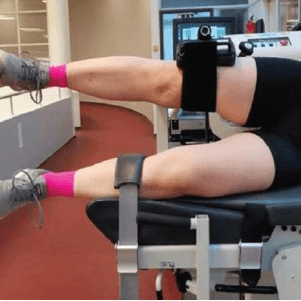
Isokinetic testing is a method to test muscle strength by keeping movement velocity constant.
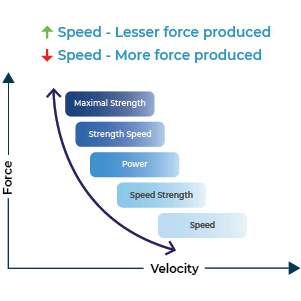
It is the gold standard for strength testing as it isolates muscle performance from speed-dependent variability. As you may know, the force production has an inverse relation with the speed.
Increased Speed – Lesser force produced
Decreased Speed – More force produced
What different velocities mean
Low velocities (e.g., 30–60°/s)
Emphasize maximum force/strength (peak torque)
Moderate velocities (e.g., 120–180°/s)
Reflect both strength and power capabilities
High velocities (>180°/s)
Focus more on power & endurance components of muscle output
Isokinetic testing parameters
Peak Torque (PT) – Maximum Strength
Maximum rotational force produced during the movement.
Total Work – Endurance
Sum of torque produced across all repetitions.
Average Power – Explosiveness
Work produced per unit of time.
Agonist/Antagonist Ratios – Muscle balance
Strength balance between opposing muscles (e.g., quads vs hamstrings).
Gayatri Suresh (PT) is a Biomechanist who has completed her B.P.Th from DES College of Physiotherapy and M.P.T (Biomechanics) from SRM College of Physiotherapy, SRMIST. Her field of clinical expertise is in movement assessments through video analysis. Apart from her work at Auptimo, she works as a Clinical Specialist at Rehabilitation Research and Device Development, IIT Madras. She has won gold medals for her Research presentations and for securing First rank with distinction in her MPT degree respectively.
The information found within this site is for general information only and should not be treated as a substitute for professional advice from a licensed medical practitioner. Any application of exercises and diagnostic tests suggested is at the reader’s sole discretion and risk.