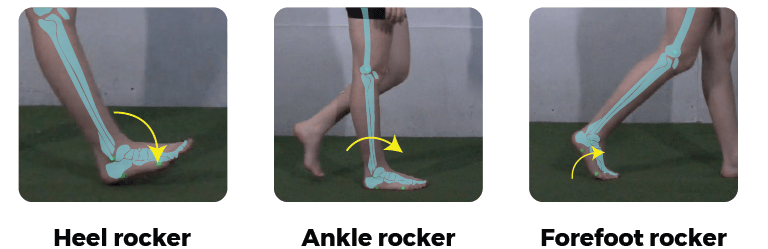
Gait is a continuous and progressive activity. For a smooth progression, the body advances through 3 sequential “gait rockers” during stance i.e. a coordinated pattern of dorsiflexion-plantarflexion-dorsiflexion.
First Foot Rocker
The Heel Rocker – from heel contact to foot flat; the heel forms the pivot for rotation
Second Foot Rocker
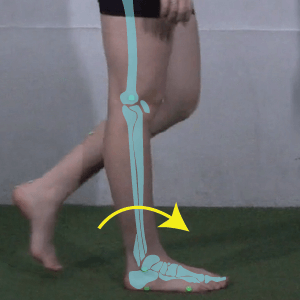
Ankle Rocker – From foot flat to midstance; the ankle forms the pivot for rotation
Third Foot Rocker
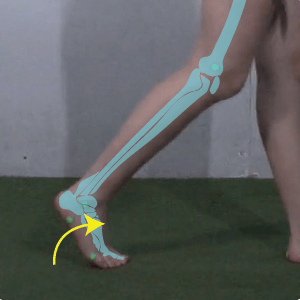
Forefoot Rocker – From heel off to toe off; Metatarsophalangeal joints form the pivot for rotation
Muscle Activity during Gait Rockers
Heel Rocker –
Dorsiflexor group – Eccentric Activity for controlled descent into foot flat
Ankle Rocker –
Foot Intrinsics, Plantarflexor Muscle group – Eccentric Activity to control degree of foot pronation and rolling of tibia over talus respectively
Forefoot Rocker – Plantarflexor muscle group – Concentric Activity to supinate the foot to form a rigid lever and generate propulsive force
Life without gait rockers: How the body adapts
Certain musculoskeletal or neurological conditions impair the body’s ability to perform the 3 gait rockers, hence causing changes in gait cycle. However, compensations occur to keep the individual functional –
1. Absent Heel Rocker
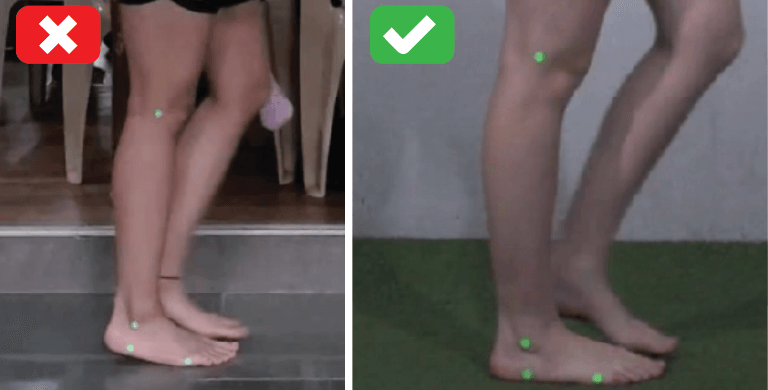
What Happens: The foot slaps down flat instead of rolling from the heel.
Effect on gait:
Shortened steps,
Reduced gait speed
Use of hip muscles to advance the leg.
2. Absent Ankle Rocker
What Happens: The tibia can’t move forward over the foot (limited dorsiflexion).
Causes:
Early heel rise or “vaulting” is commonly used to provide ground clearance to the swing phase side.
May also be present due to tightness of ankle plantarflexors.
3. Absent Forefoot Rocker
What Happens: The push-off phase is weak or missing.
Effect on gait:
Reduced step length.
Overuse of hip flexors to lift and advance the limb.
Hope you found this information useful! Stay tuned to our blog section for more such updates.
Also, did you know? GaitON offers a comprehensive 2-D Gait analysis system to assess normal and pathological gait! To launch gait analysis at your center, contact us today!
Gayatri Suresh (PT) is a Biomechanist who has completed her B.P.Th from DES College of Physiotherapy and M.P.T (Biomechanics) from SRM College of Physiotherapy, SRMIST. Her field of clinical expertise is in movement assessments through video analysis. Apart from her work at Auptimo, she works as a Clinical Specialist at Rehabilitation Research and Device Development, IIT Madras. She has won gold medals for her Research presentations and for securing First rank with distinction in her MPT degree respectively.
The information found within this site is for general information only and should not be treated as a substitute for professional advice from a licensed medical practitioner. Any application of exercises and diagnostic tests suggested is at the reader’s sole discretion and risk.