When it comes to optimizing performance and preventing injuries, athletes and runners often focus on footwear design, training techniques, and biomechanics. However, one crucial yet overlooked factor is the way they lace their shoes. The lacing pattern can significantly influence foot stability, pressure distribution, and even muscle activation, ultimately impacting biomechanics.
From reducing excessive foot motion to alleviating discomfort caused by high-pressure zones, choosing the right lacing technique can make a measurable difference in both comfort and efficiency. In this blog, we explore how different lacing patterns affect biomechanics and how athletes can use them to their advantage.
Types of lacing pattern

REG 6 (6- Eyelet Regular Cross-Lacing pattern)
WEAK 6 (6- Eyelet Weak Lacing)
TIGHT 6 (6- Eyelet Tight Lacing)

EYE 12 (Lacing through Eyelets 1 & 2)

EYE 135 (Lacing through Eyelets 1, 3 & 5)
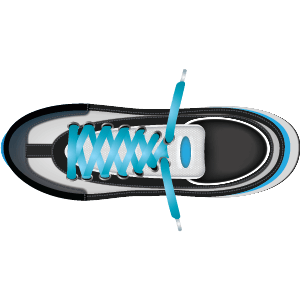
ALL 7 (7- Eyelet Full Lacing, including an extra eyelet loop between 6th & 7th eyelets)
- Adequate Foot-Shoe coupling
- Moderately comfortable; perceived as a neutral option by participants
- Moderate shock attenuation; inferior to ALL7
- Moderate pronation velocity; better than EYE 12 & WEAK 6 but worse than ALL 7 & TIGHT 6
- Balanced pressure distribution, but inferior to ALL 7
- Reduced Foot-Shoe coupling
- Highly comfortable
- Moderate shock attenuation; inferior to ALL 7 & TIGHT 6 lacing styles
- Higher pronation velocity due to weaker coupling
- Maximum Foot-Shoe coupling
- Lowest comfort due to excessive tightness
- Excellent shock attenuation
- Lowest pronation velocity, offering strong rearfoot motion control
- Weak Foot-Shoe coupling
- Least comfortable & least stable; significant foot sliding
- Poor shock attenuation; Lowest peak vertical impact forces, high loading rate
- Highest pronation velocity; indicating poor motion control
- Lowest peak pressure under Metatarsal heads III & V; high heel pressures due to foot sliding
- Moderate Foot-Shoe coupling
- High comfort due to moderate tightness & even pressure distribution
- Moderate shock attenuation; higher loading rates & lower peak vertical forces compared to ALL 7 & TIGHT 6
- Higher pronation velocity compared to ALL 7, REG 6, & TIGHT 6
- Maximum Foot-Shoe coupling
- Similar comfort to REG 6 but with added stability
- Most effective shock attenuation due to excellent foot-shoe coupling
- Lowest pronation velocity, offering optimal rearfoot control
- Most even plantar pressure distribution; lowest heel pressure & reduced midfoot pressure compared to other styles
*Based on no. of eyelets used and their tightness
^ The biomechanical interaction and alignment between the foot and the shoe, influencing how effectively the shoe supports, stabilizes, and accommodates the foot’s movements and forces during activities to ensure comfort, performance, and injury mitigation.
Lacing patterns recommended for rearfoot strike runners
1. Enhanced Stability:
ALL7: Best for runners needing strong stability and even pressure distribution, especially for those with pronation concerns or a tendency toward instability.
2. Comfort and General Use:
EYE135 or WEAK6: Suitable for recreational runners who value comfort and a snug fit without requiring maximum stability.
3. Minimizing Shock:
ALL7 and TIGHT6: Ideal for runners exposed to high impacts or those at risk of lower-limb injuries, as these patterns provide excellent shock absorption.
4. Loose Fit Preference:
EYE12: Appropriate for casual runners or those who prefer a less restrictive shoe, though it offers minimal stability.
5. Moderate Control:
REG6: A versatile choice for general running needs, offering a balance between comfort and stability without extremes in either.
While often overlooked, lacing patterns play a crucial role in fine-tuning biomechanics, influencing everything from foot stability to pressure distribution. A simple adjustment in lacing can help reduce discomfort, prevent injuries, and even enhance performance by ensuring optimal foot support.
Whether you’re an athlete looking to improve efficiency or someone seeking relief from foot pain, experimenting with different lacing techniques can be a game-changer.
Similar to lacing patterns, running form is equally important, which can be evaluated during a running gait analysis. GaitON offers a comprehensive 2D analysis to measure running gait. To book a demo, or get a running analysis done, contact us today!
ABOUT THE AUTHOR

GAYATRI SURESH (PT)
Gayatri Suresh (PT) is a Biomechanist who has completed her B.P.Th from DES College of Physiotherapy and M.P.T (Biomechanics) from SRM College of Physiotherapy, SRMIST. Her field of clinical expertise is in movement assessments through video analysis. Apart from her work at Auptimo, she works as a Clinical Specialist at Rehabilitation Research and Device Development, IIT Madras. She has been conferred with gold medals for her Research presentations and for securing First rank with distinction in her MPT degree respectively
Since you’re here…
…we have a small favor to ask. More people are reading our blogs everyday, and each week we bring you compelling content to help you treat your patients better. Please take a moment to share the articles on social media, engage the authors with questions and comments below, and link to articles when appropriate if you have a blog or participate on forums of related topics. — Team Auptimo